Reading 06
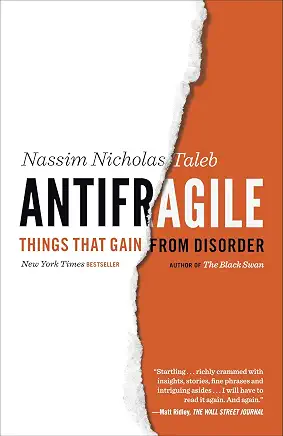
Antifragile
Things That Gain from Disorder · 反脆弱:从不确定性中获益
The opposite of fragile is not merely strong. It is antifragile.
When I first read this sentence, I spent a long time trying to understand it. In everyday social and business life, I have seen many people and organizations develop smoothly for years, only to collapse almost instantly when a black swan event arrives. They possess little capacity to withstand the unexpected, repair themselves, and remain alive.
Strength can resist a shock. Resilience can recover from one. Antifragility goes further: it is the ability to learn from disorder and become better because of manageable stress, volatility, and failure. It is not recklessness. It is a way of responding to risk that must be practiced consciously in ordinary times—sometimes by deliberately accepting small, survivable risks instead of trying to avoid every uncertainty.
This reminds me of mutation in evolution. Most mutations do not create an advantage, but variation gives natural selection possibilities to work with. I see a related idea in artificial intelligence: exploration, randomness, variation, and repeated trial can sometimes reveal a better solution that a perfectly fixed path would never discover. AI is not automatically antifragile, but this willingness to test alternatives reflects the same useful respect for uncertainty.
The lesson I carry into life and business is simple: do not build a system that can survive only when everything goes according to plan. Keep enough room to endure a shock. Learn from small failures. Preserve the ability to repair, adapt, and continue—and, when possible, allow uncertainty to make you better.